The network layer is inherited, not imitated.
JA4 and HTTP/2 match, byte for byte, the Chrome build the browser claims to be. Not a promise: a check that runs in CI on every build.
Who is in the room matters more than what is in it.
Three rules by which people get in.
A member invites you under their own name and answers for you with their standing. Invites are few and earned, and members give them only to people they are prepared to answer for.
Without an inviter, applications are read when a window opens. Current members may be consulted before acceptance. Every application gets an answer after the window closes, either way.
Price and terms are given at acceptance, not here. Leaving means leaving: the way back is a new invite.
Every screen.
The six screens an operator opens every day.
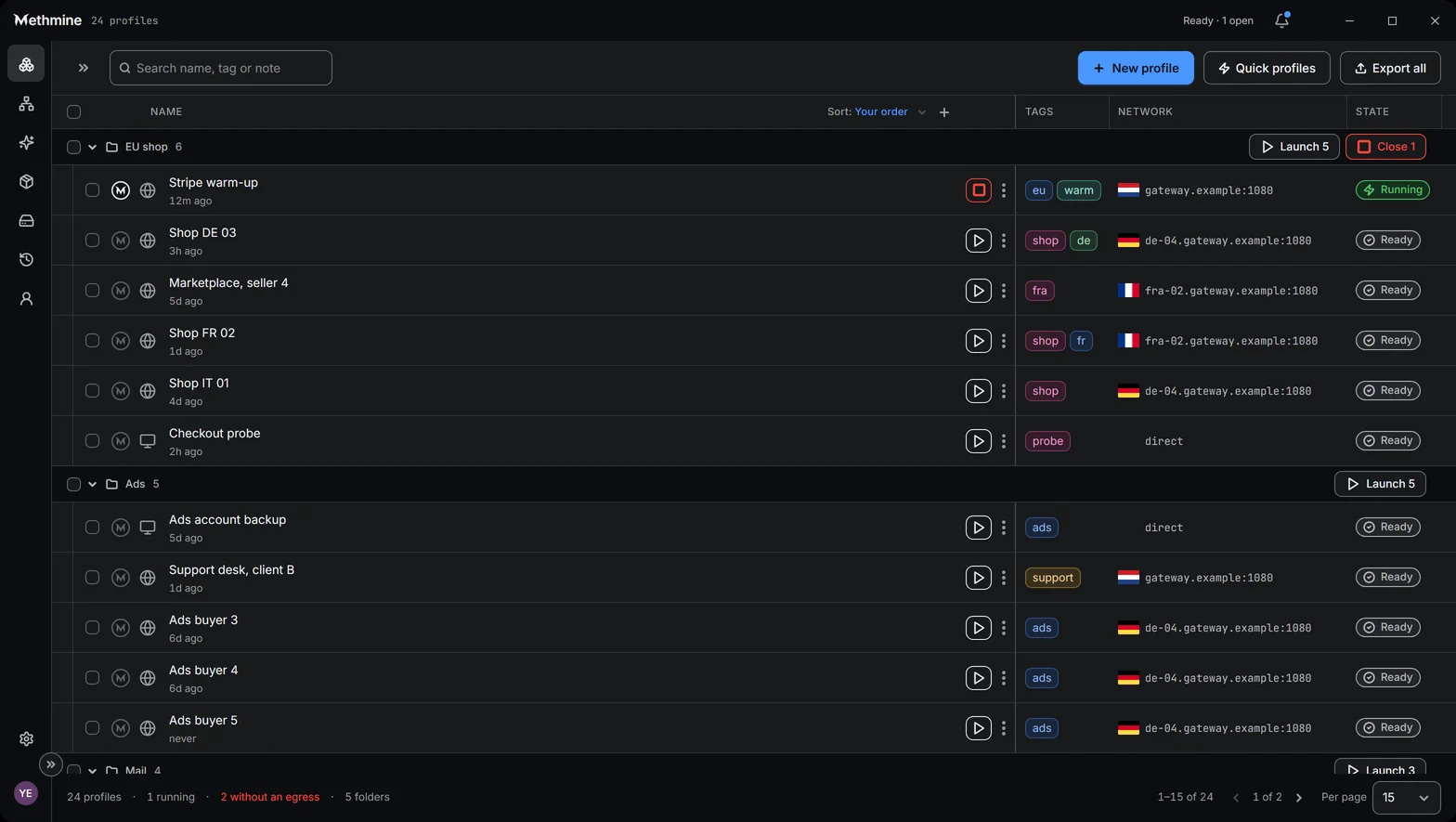
The whole fleet on one screen.
Folders, tags, egress and state in every row. A folder launches at once with one button, and a profile with no egress is visible before launch, not after.
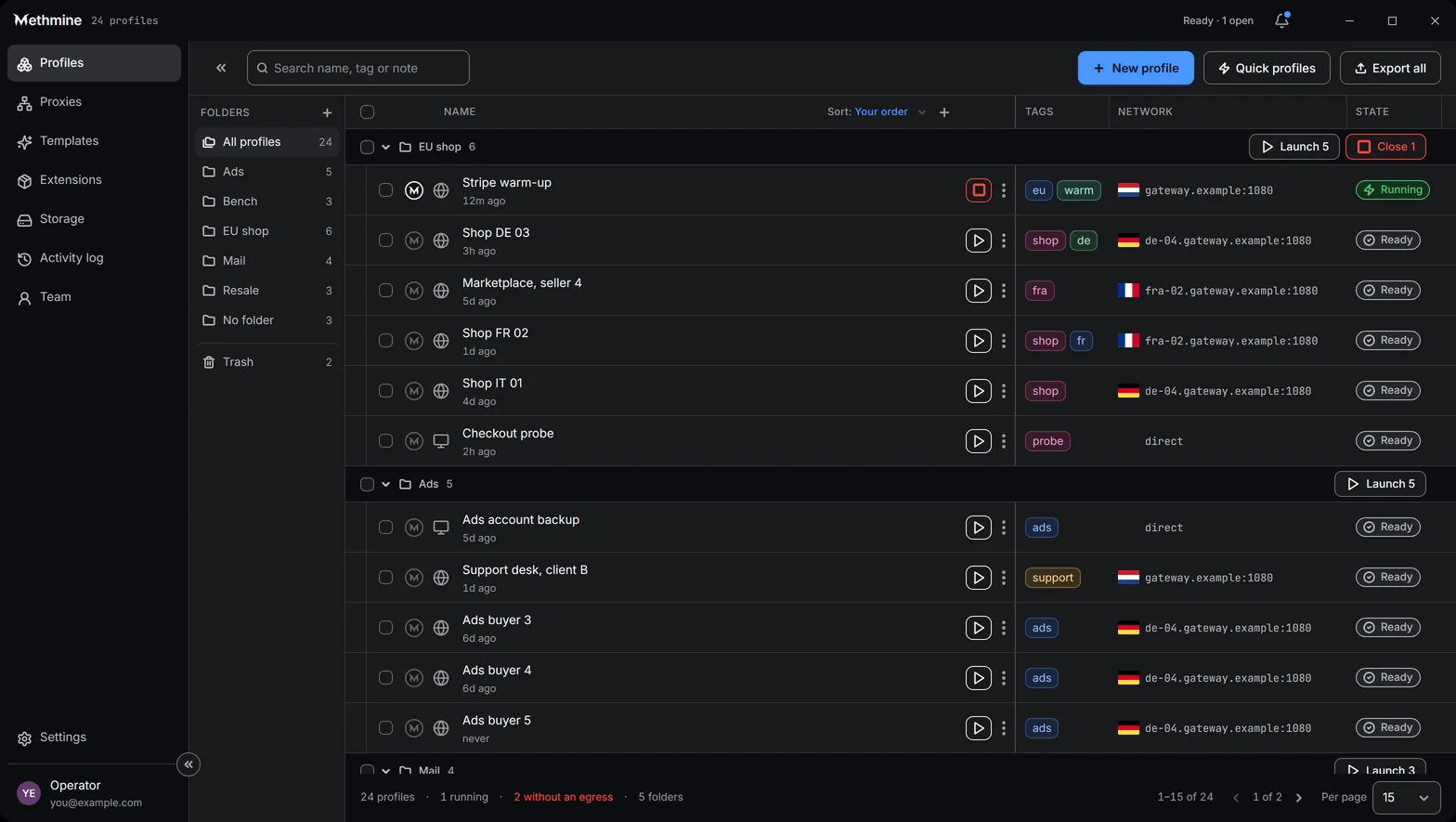
Endpoints kept once.
An address is stored once and assigned to profiles, so the fan-out on one exit is stated before the assignment, not discovered after it. If the supplier never said whether it rotates, the screen says so.
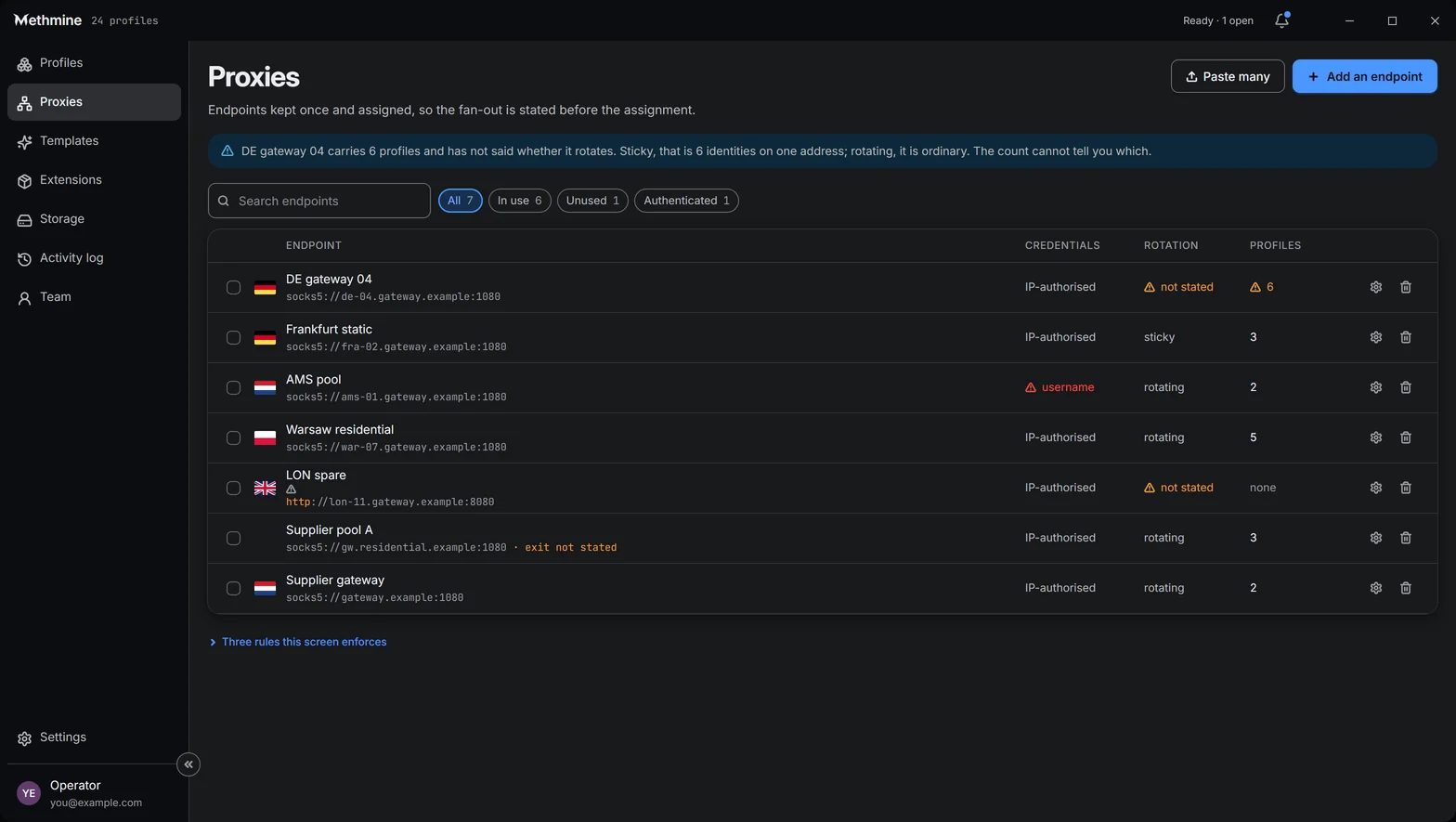
The decisions you would make again.
A template fixes what should repeat and never the machine itself. Every profile still draws its own seed, and the screen shows how many variants it has left.
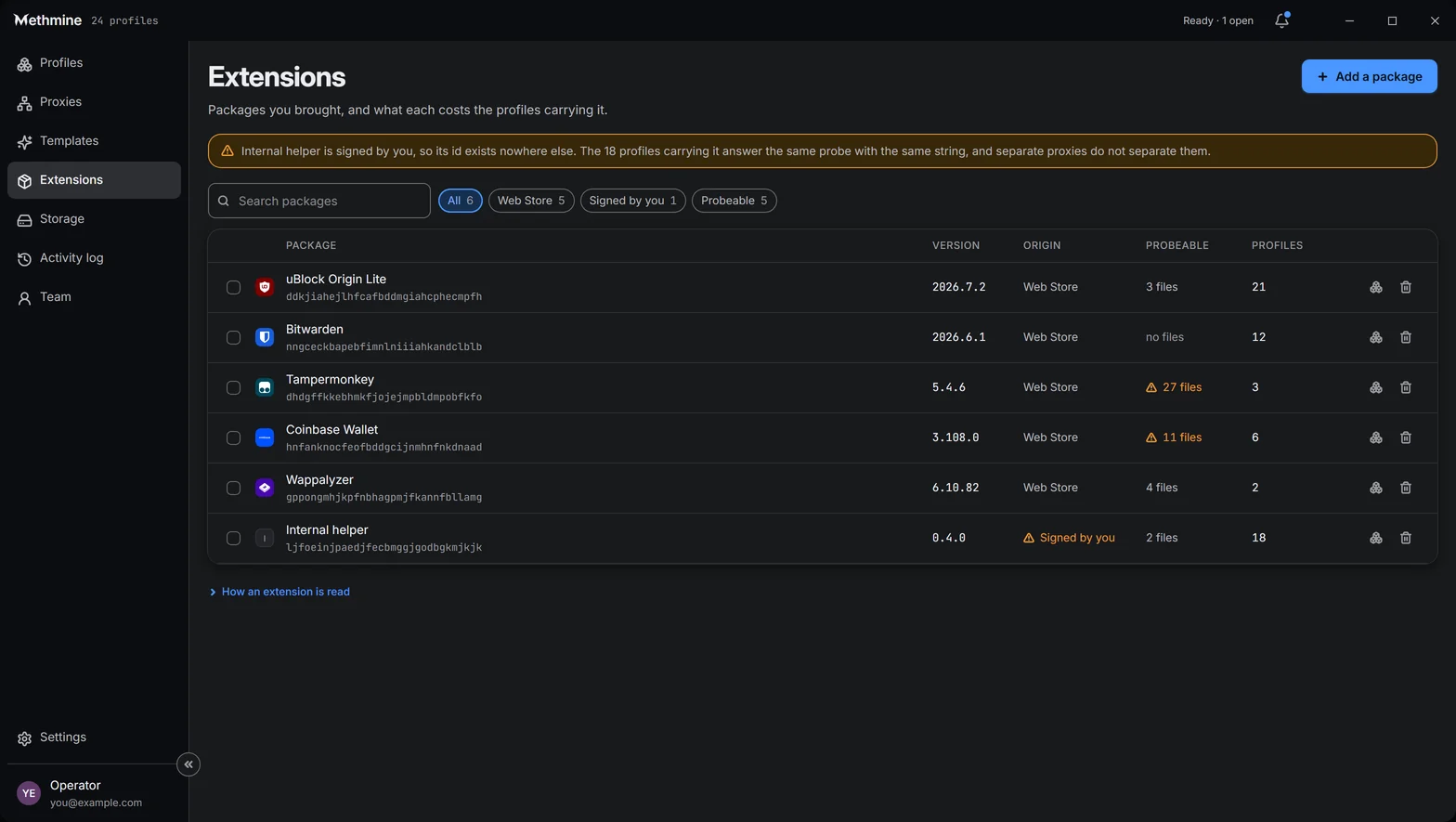
Extensions, and what they cost.
The packages you brought, and what each costs the profiles carrying it. An extension signed by you exists nowhere else, and the screen is the first to say so.
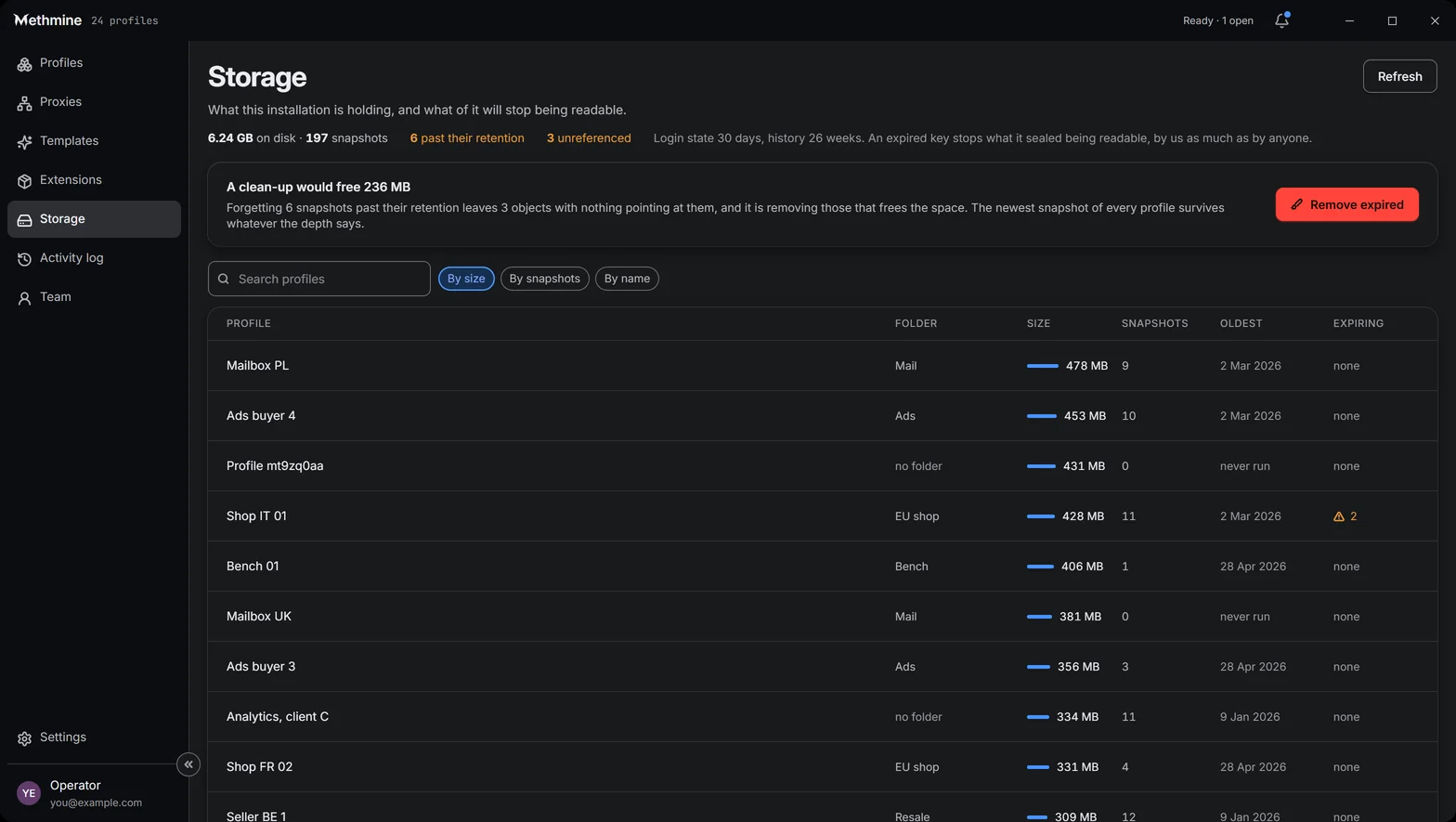
What is on the disk, and when it expires.
Login state lives thirty days, history twenty-six weeks. An expired key makes what it sealed unreadable, for us as much as for anyone.
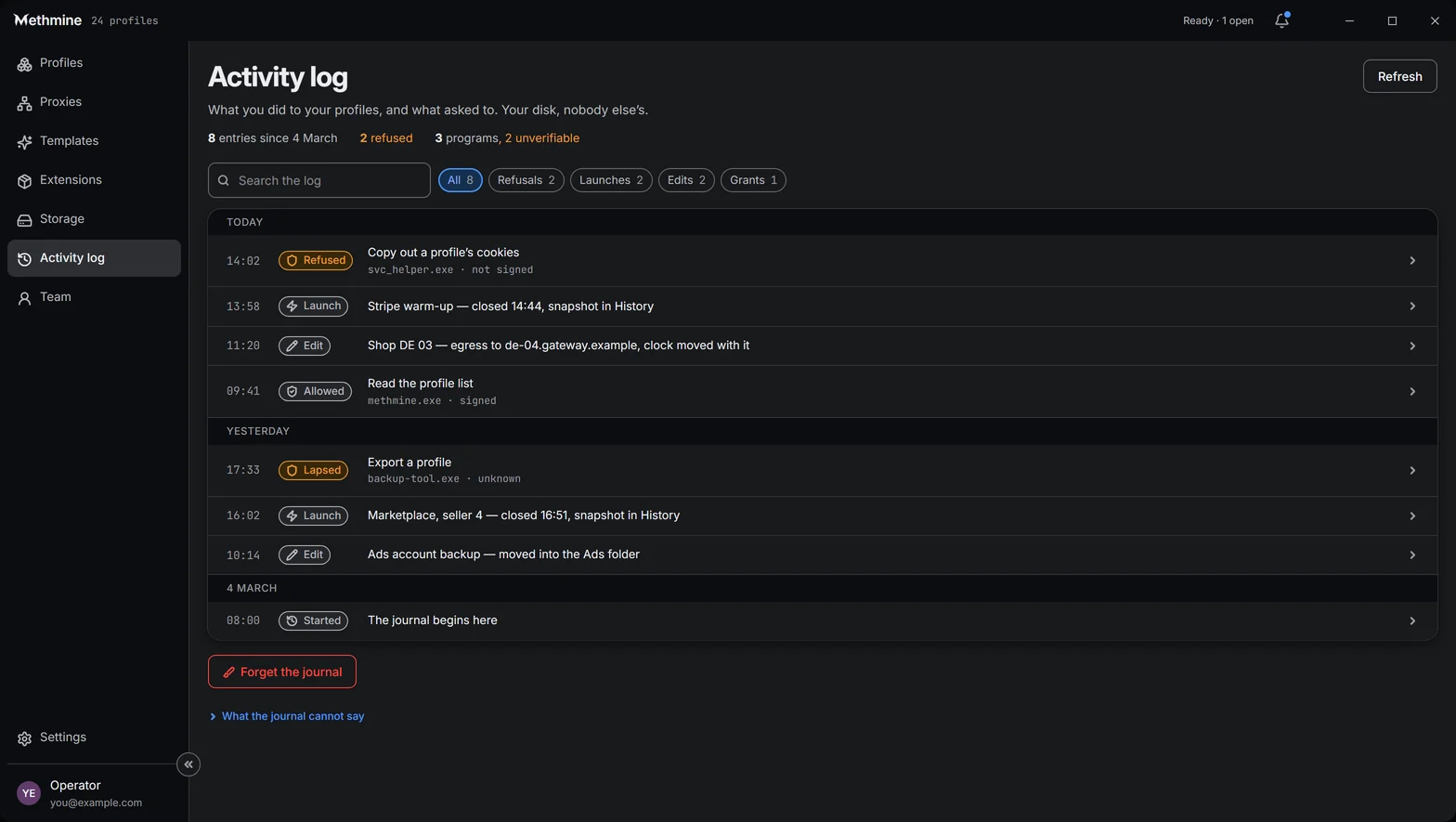
A journal of what touched your profiles.
What you did and what asked for access: the signed program got it, the unsigned one did not. Your disk, nobody else’s.
What exists today.
- Voice
- Closed voice for members is live. It is what the room uses every day.
- Browser
- Being built for the members. Profiles stay on your disk and open with your passphrase; there is no copy in a cloud.
- Entry
- By invitation, or by an application read in the next window.
Application
Three fields. This is vetting, not a lead form.