
Methmine Browser
A multi-account browser on our own engine, Methium. In closed beta.
Why the room is building it.
A tool that opens from the disk rather than from somebody’s cloud. A price without a sales team. Data we do not hold, because we do not need it.
The network layer is inherited, not imitated.
JA4 and HTTP/2 are checked, byte for byte, against the Chrome build the browser claims to be. Not a promise: a check that is part of the engine build and passes on the bench.
The engine, Methium.
- what it is
- Our own build of Chromium with our own patches. Not a browser written from scratch and not a wrapper around somebody else’s binary. The patches are few, and they are rebuilt on every release.
- what is inherited
- The network layer. JA4 and HTTP/2 are checked, byte for byte, against the Chrome build the browser claims to be; the check is part of the engine build.
- what stays put
- Every value a page sees is computed once at launch and is the same in every tab, worker and frame. Nothing is rolled again.
- what is cut out
- Chromium’s background services that talk to other people’s servers are switched off or bound to us. Where the browser actually connects is measured and published with the first release.
Every screen.
The six screens an operator opens every day.
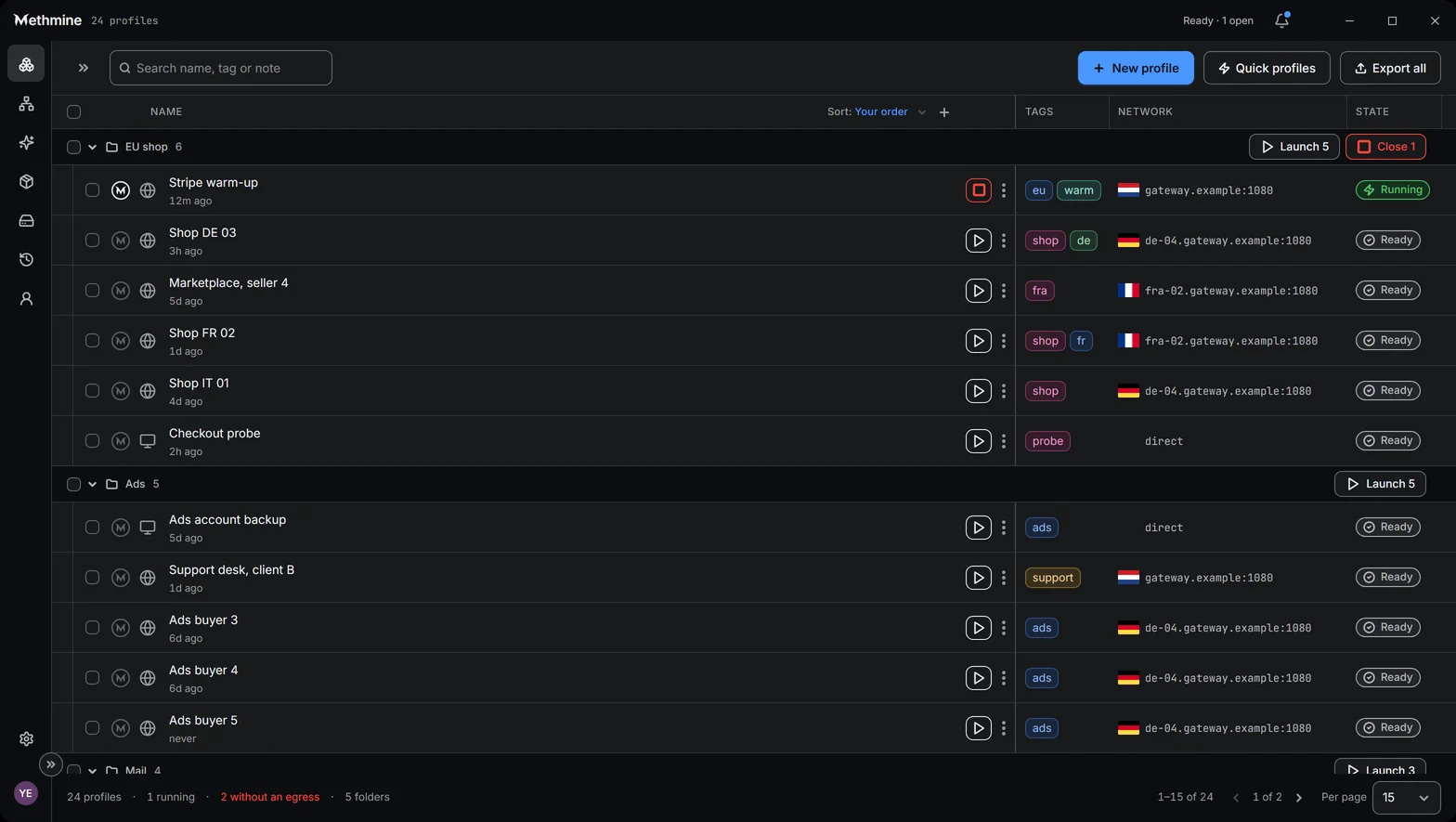
The whole fleet on one screen.
Folders, tags, egress and state in every row. A folder launches at once with one button, and a profile with no egress is visible before launch, not after.
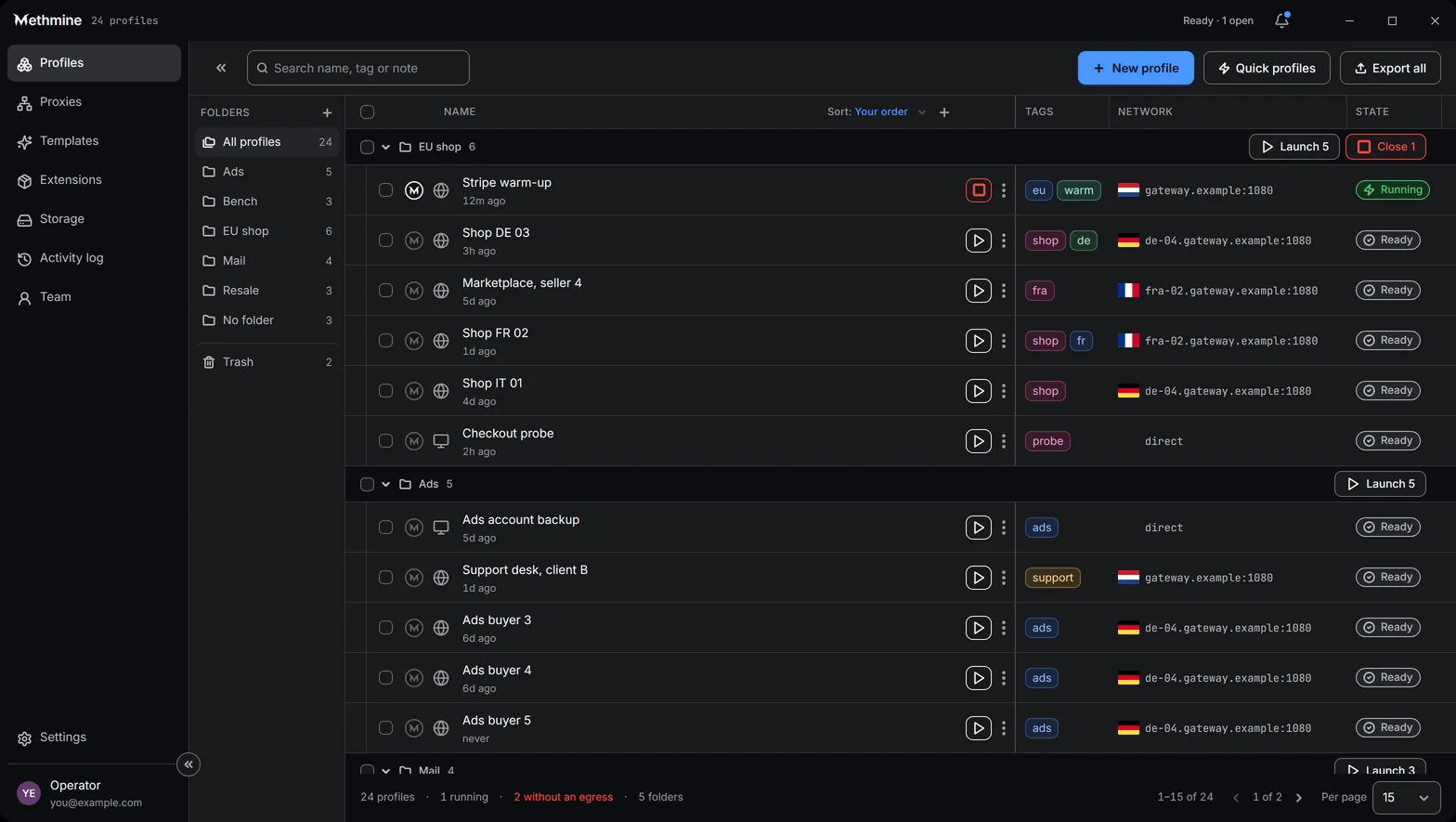
Endpoints kept once.
An address is stored once and assigned to profiles, so the fan-out on one exit is stated before the assignment, not discovered after it. If the supplier never said whether it rotates, the screen says so.
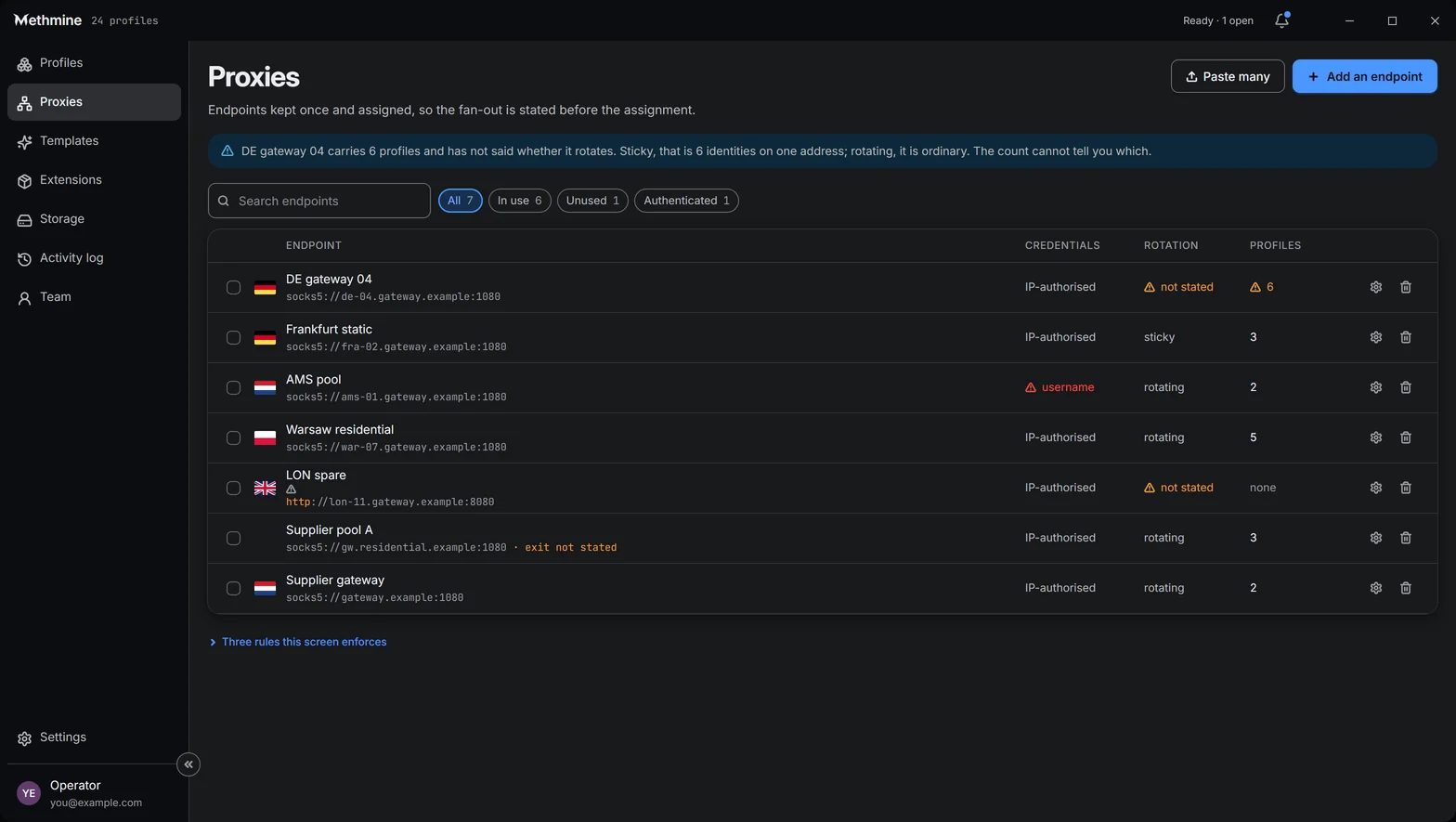
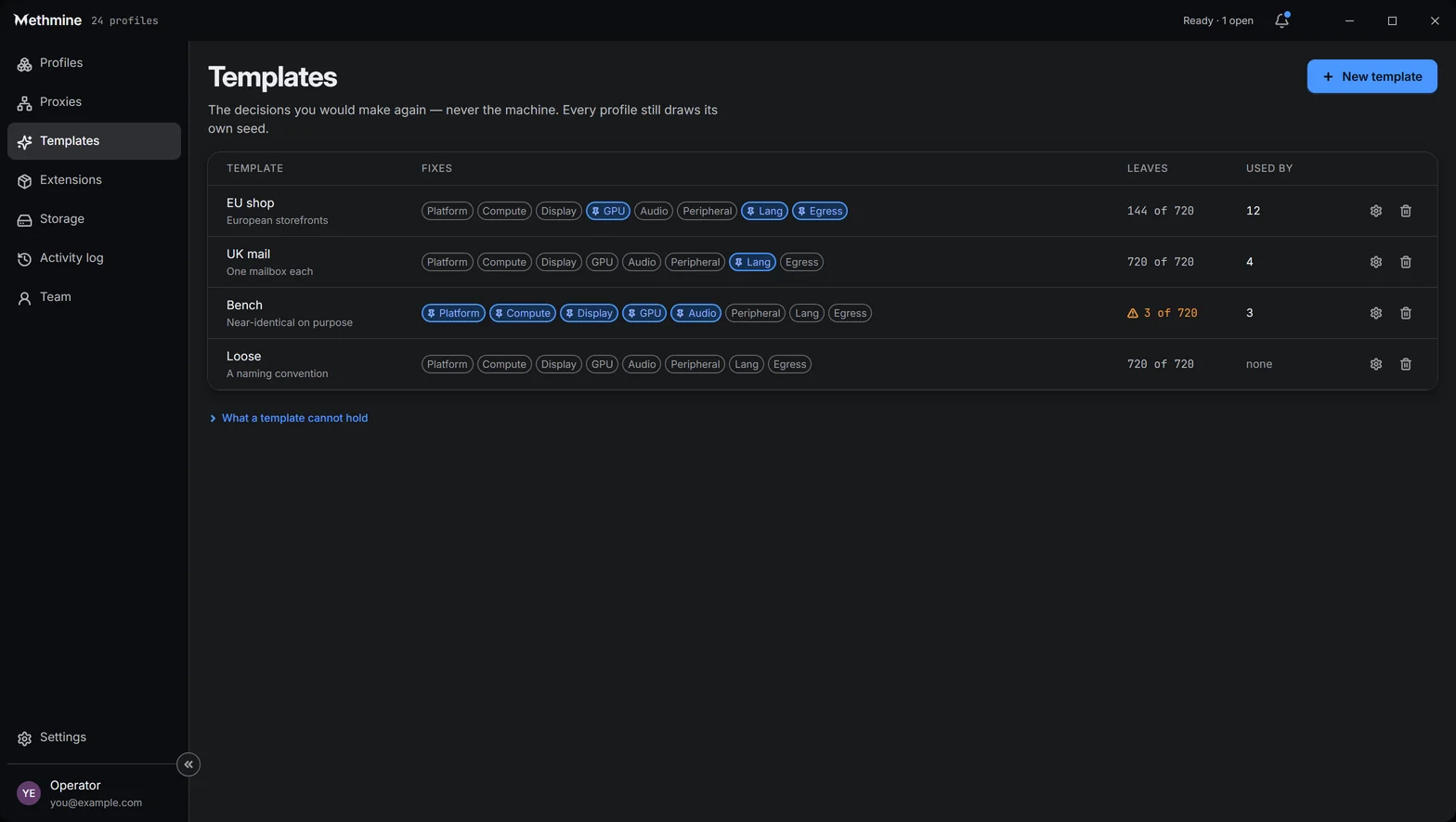
The decisions you would make again.
A template fixes what should repeat and never the machine itself. Every profile still draws its own seed, and the screen shows how many variants it has left.
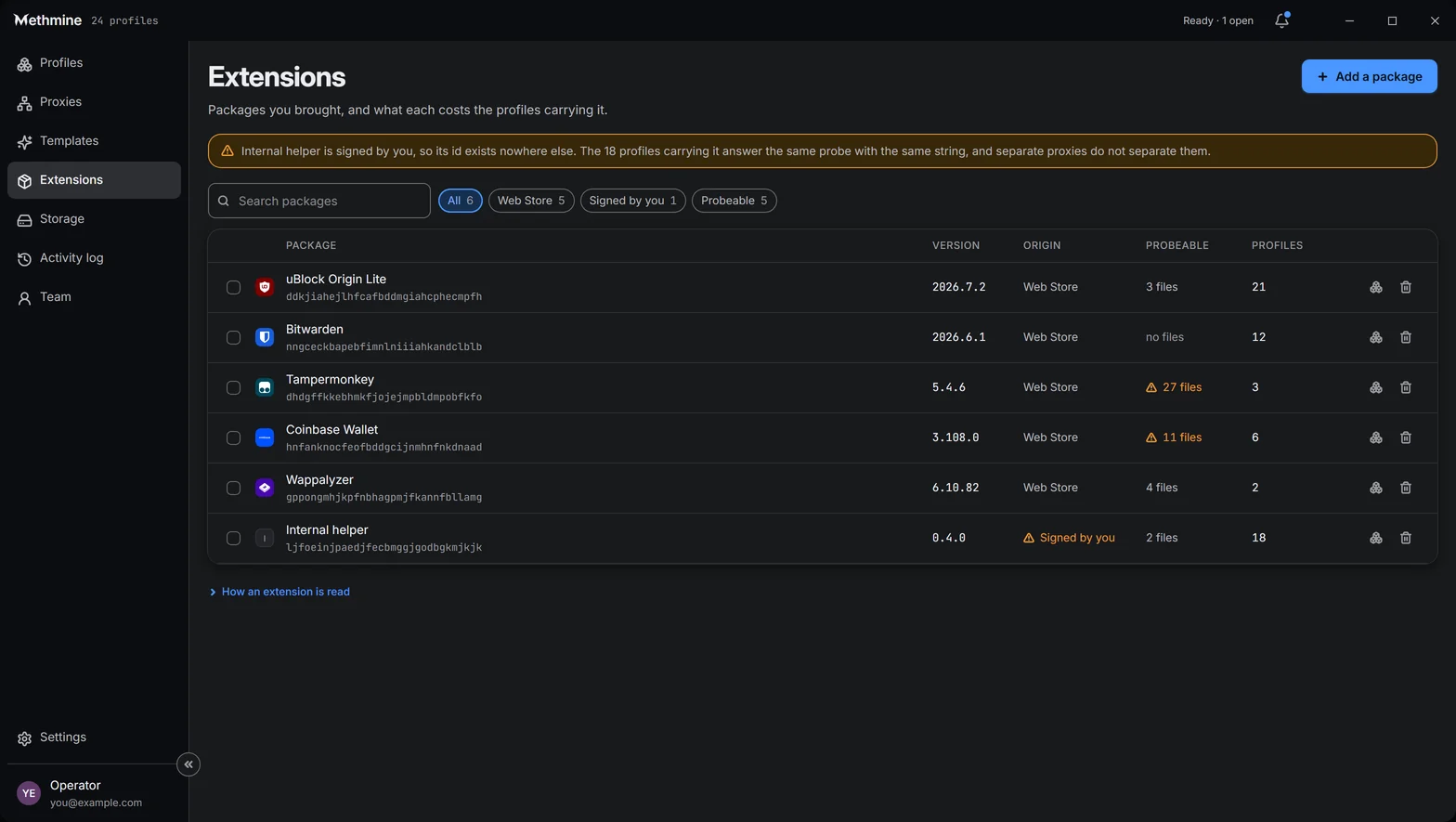
Extensions, and what they cost.
The packages you brought, and what each costs the profiles carrying it. An extension signed by you exists nowhere else, and the screen is the first to say so.
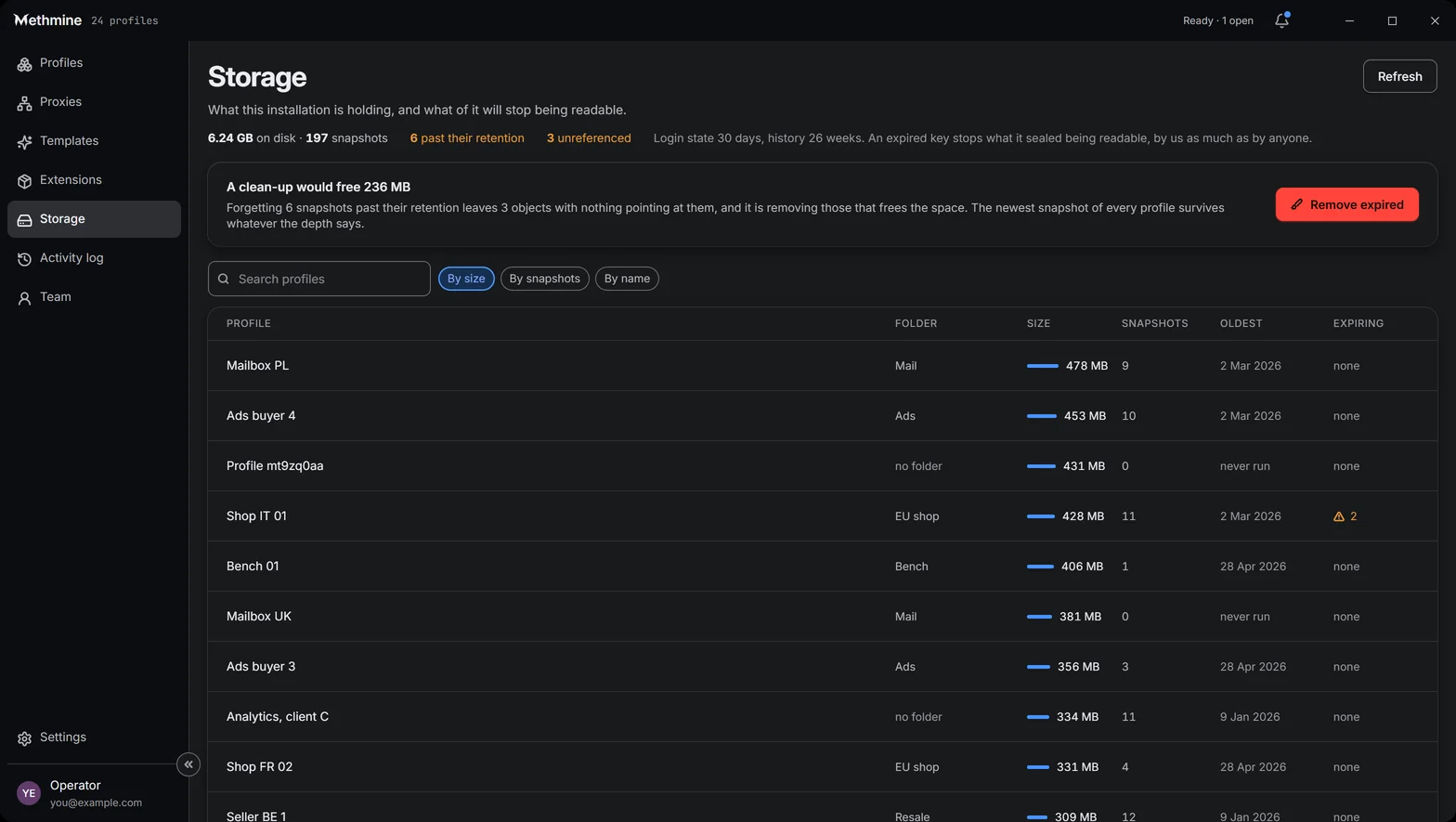
What is on the disk, and when it expires.
Login state lives thirty days, history twenty-six weeks.
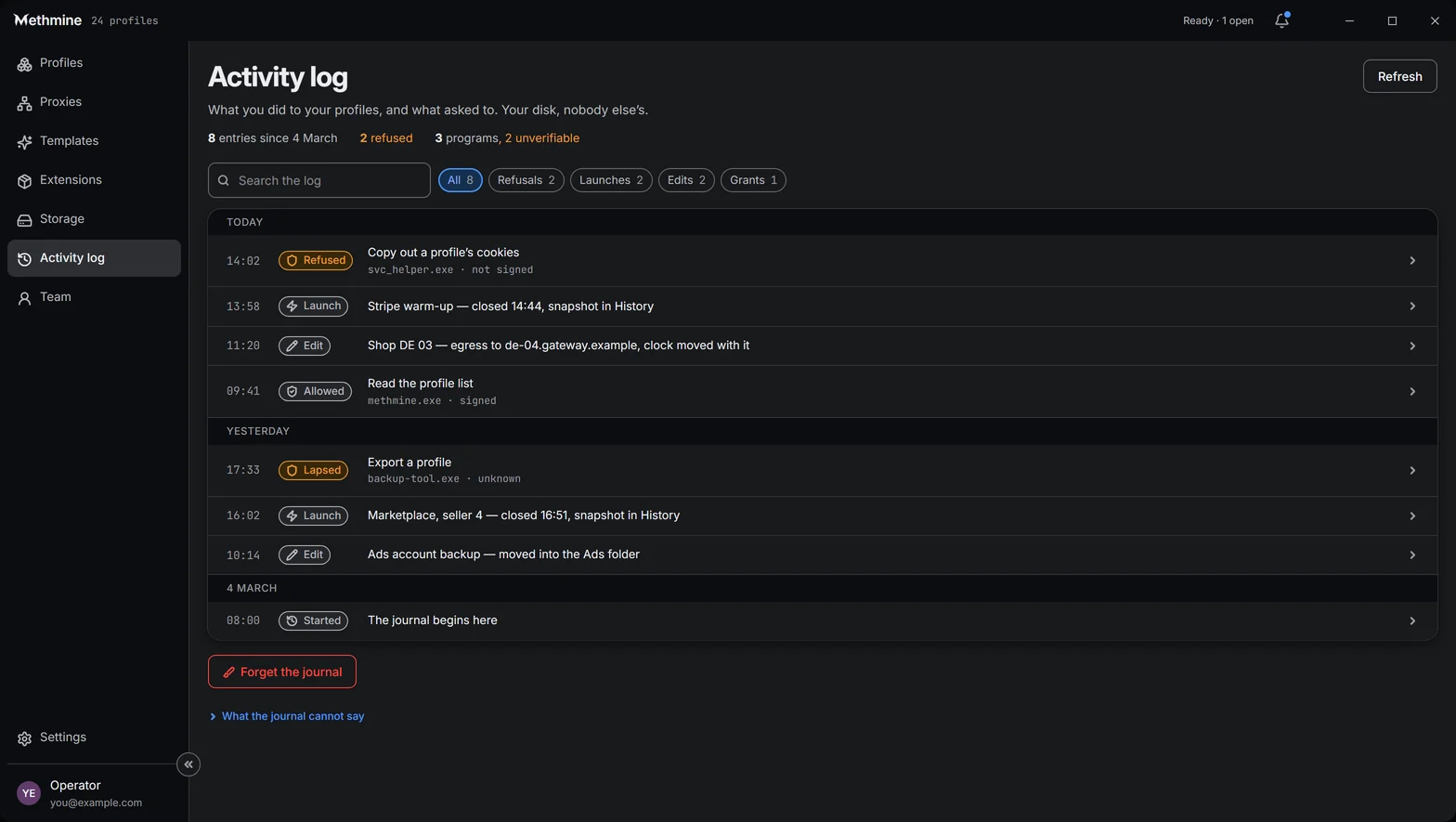
A journal of what touched your profiles.
What you did and what asked for access: the signed program got it, the unsigned one did not. Your disk, nobody else’s.
What it does not do.
We push nobody else’s extensions through a channel of our own, wallets included.
We do not ask you to switch off your firewall so that our product will start.
A profile does not ask a server’s permission to be read.
What we hold.
Profiles stay on your disk; we keep no copy. They open with your password. A key that can open them is held by us, so that a forgotten password is not the end of your profiles. We chose that with our eyes open.
- where the browser connects
- The list of addresses the browser talks to is published with the first release, measured rather than written.
- what does not depend on us
- Reading and exporting profiles. Whatever happens to the subscription or to us, that works from the disk.
What exists today.
- A build is at the closed beta testers.
- The engine builds and passes its browser checks on the bench.
- The network-layer check is written, is part of the engine build, and passes on the bench against our build.
- The profile manager exists; the screens above are from its design build.
- Sign-in with an email and a password works.
- The account password can be reset; a reset does not open the profiles. The recovery key does, and for now that is done from the command line, not from the app.
How you get it.
Closed beta members get the browser. Entry by application or invitation.